
Yoonneedle: Trippy Cats and the Joy of Precision
Seoul tattoo artist Yoonneedle blends freedom, perfectionism, and playfulness in his “TrippyCat” designs, turning personal passions into permanent art.

Yoon Ziho—known as Yoonneedle—is a Seoul-based tattoo artist whose art flows from the things he loves most: creative freedom, electronic music, and the presence of his two cats, Eddie and Danji. With more than a decade of experience in drawing, he discovered tattooing in 2019, first exploring the meditative rhythm of dotwork and hand-poked techniques. Around 2022, he transitioned to machine tattooing, and by 2025, his style had fully evolved into what is now his signature: the psychedelic and instantly recognizable “TrippyCat”.
His work combines a perfectionist’s discipline with spontaneous energy. Every design goes through a meticulous creative process, yet the results feel playful, unexpected, and deeply personal—something clients around the world have come to connect with.
Beyond tattooing, Yoon also paints in acrylic, though these works remain reserved for exhibitions only. Whether on skin or canvas, his art reflects an artist deeply in love with his craft—someone who still wakes up excited to go to the studio, even on Christmas.
In this interview, we talk to Yoonneedle about his stylistic evolution, the story behind TrippyCat, and how discipline, joy, and a little chaos keep his work alive.
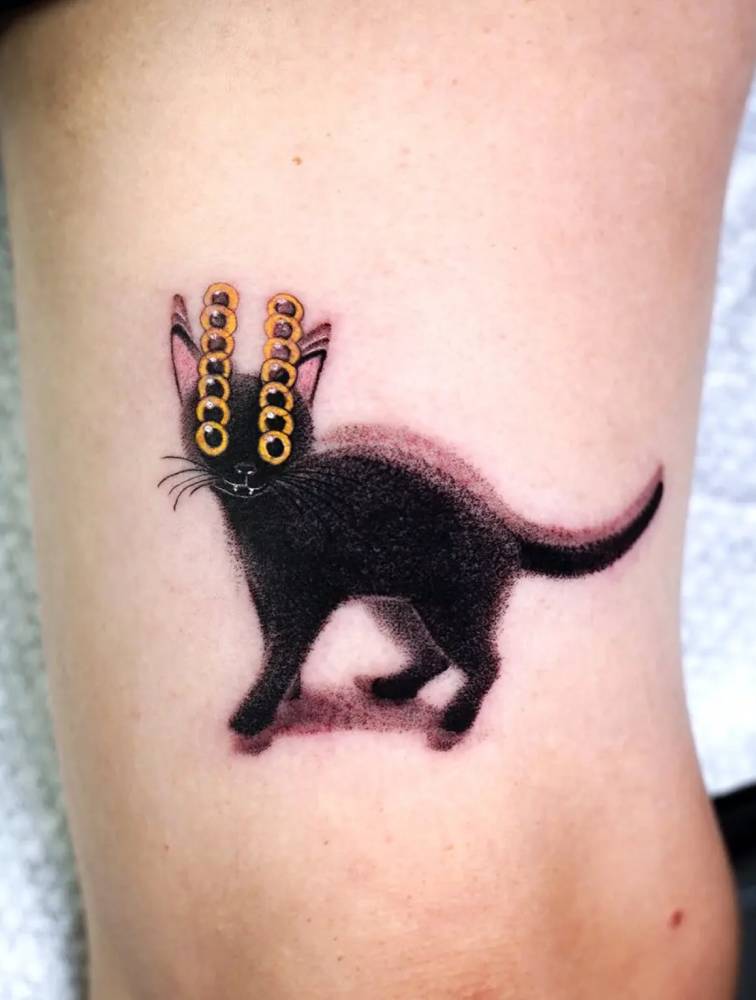
You’ve said discovering tattooing in 2019 changed your life. What was it about tattooing that clicked so deeply for you?
The permanence of tattooing resonated with me the most. It felt as though the drawings I created were coming alive on the skin. The unique language of tattoo expression was incredibly new and compelling to me, especially after having drawn for so many years.
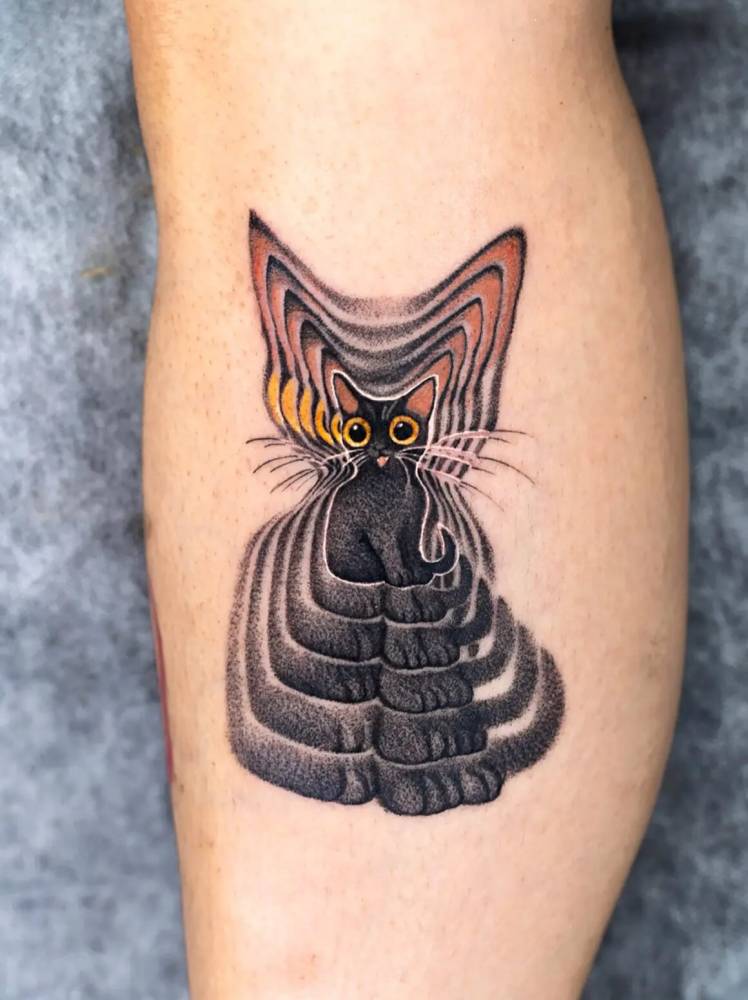
You began with hand-poked tattoos with a distinctive dotwork style. How did that period shape your approach to detail and patience?
Hand-poked dotwork was more than just a technique for me—it taught me patience and shaped my attitude toward the craft. It was during that time that I developed a sincere mindset and deep affection for tattooing. That period ultimately made me truly fall in love with the art form.
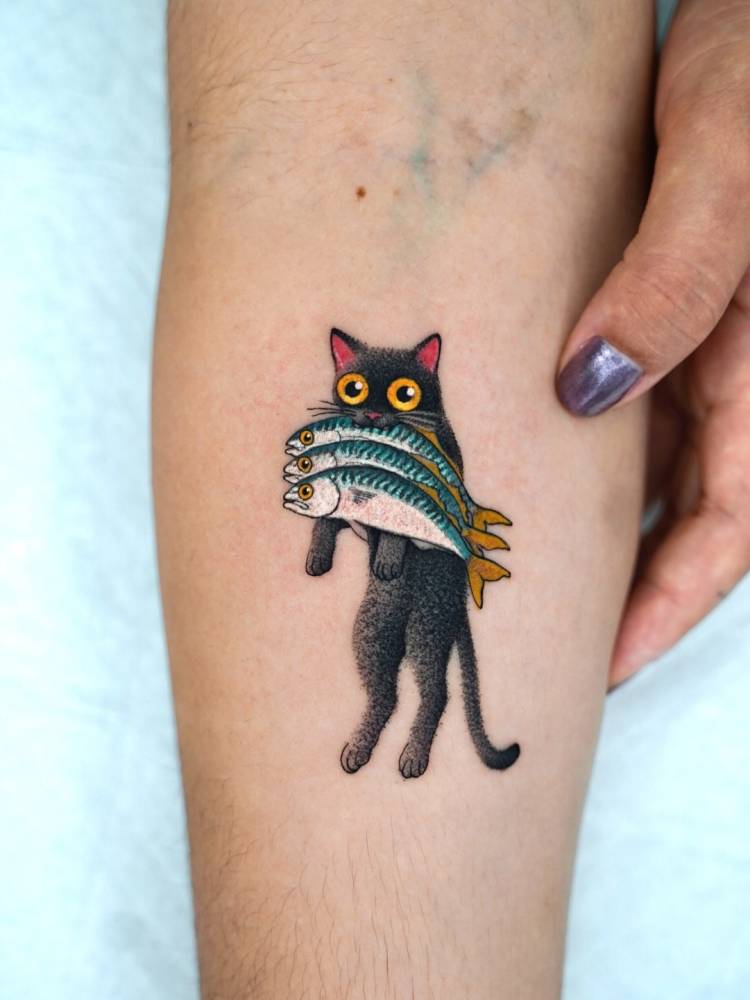
You later transitioned to machine tattooing. What was that shift like for you, both technically and creatively?
Around 2022, I felt the urge to express my work on a larger scale, with more solid forms and stronger contrast. This led me to transition from hand-poking to machine work. While I carried over the meticulous mindset I had cultivated, the shift was really about achieving technical precision and structural power. It allowed me to expand my overall approach through this new medium.

Was developing your own style something that happened naturally, or did you set out from the beginning to create something original?
It was a natural process for me. I’ve always preferred building new attempts based on my own experiences. Rather than designing a style in advance, the process of moving forward with a clear branding philosophy played a major role in shaping the style I have today.
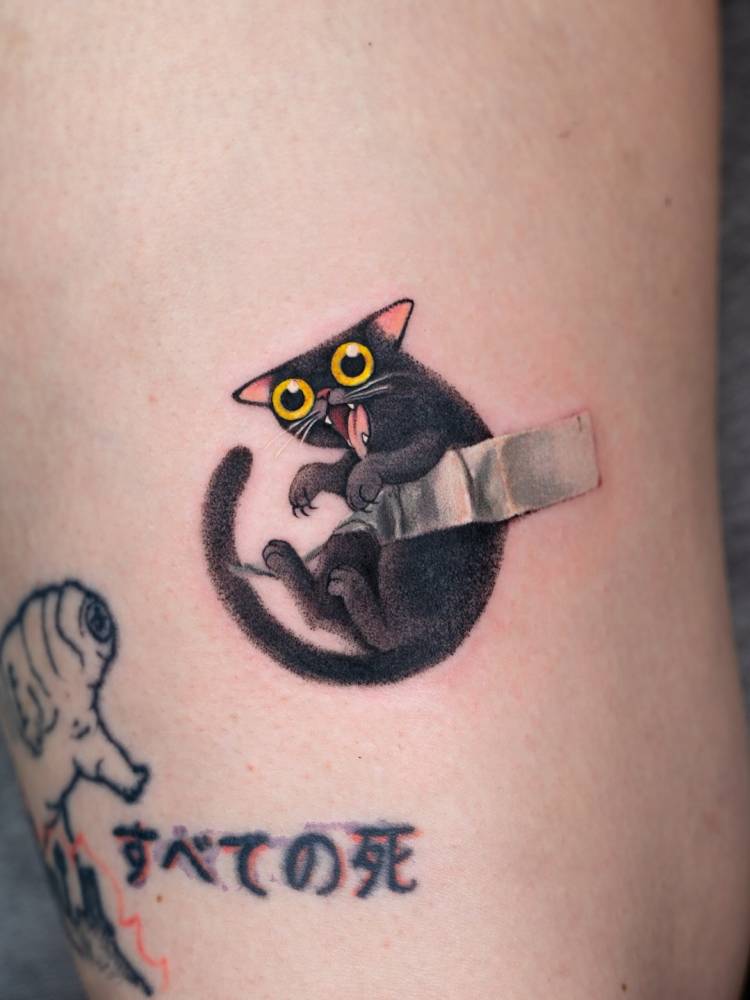
How did your style evolve from early dotwork into the bold, psychedelic world of TrippyCat?
As my interest in psychedelic culture and art deepened, I felt a strong desire to reinterpret those influences through my own design language. From that flow of inspiration, the world of TrippyCat emerged organically.
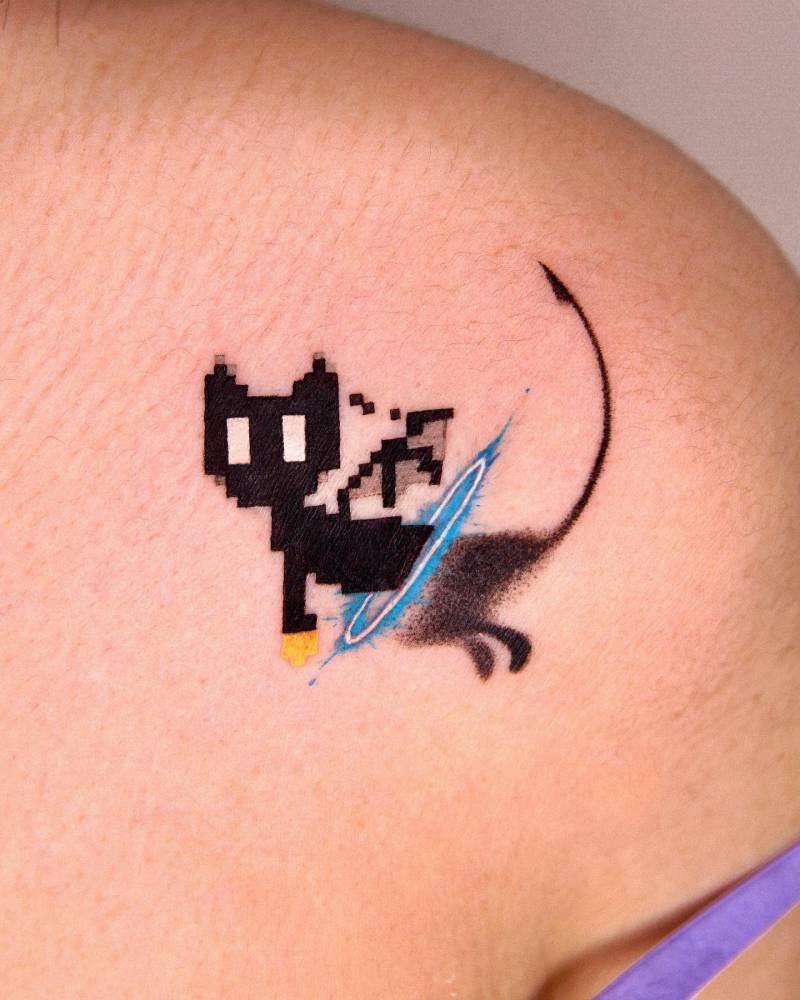
When did you first draw the TrippyCat—and what made you realize it could become a central part of your style?
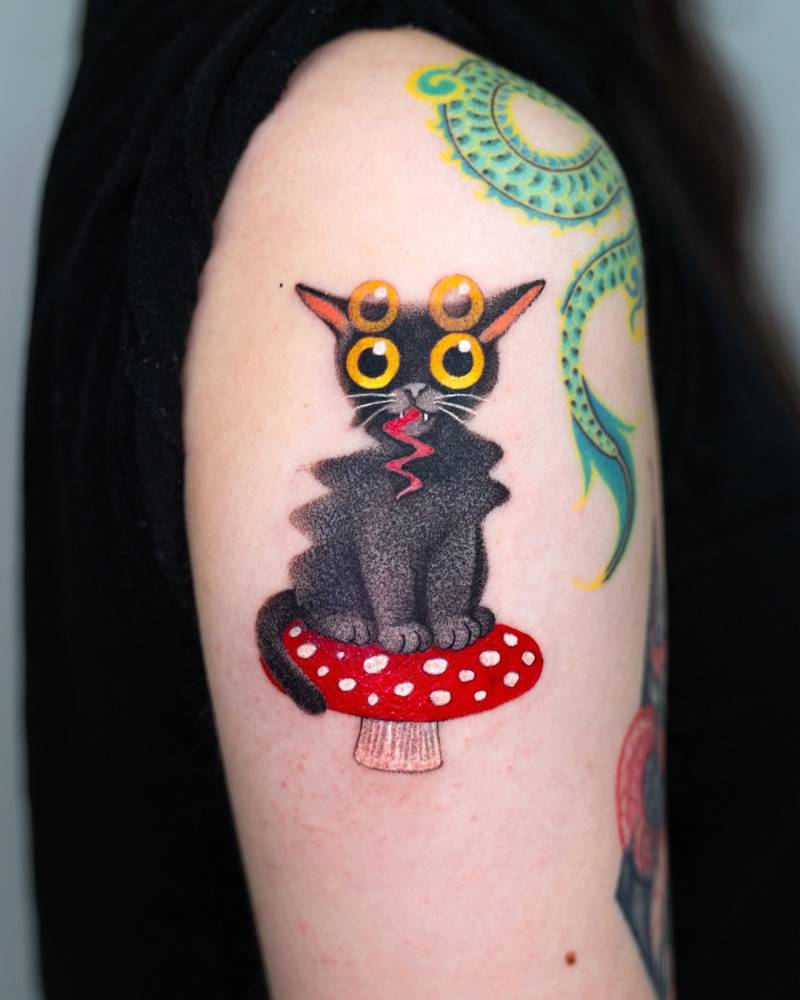
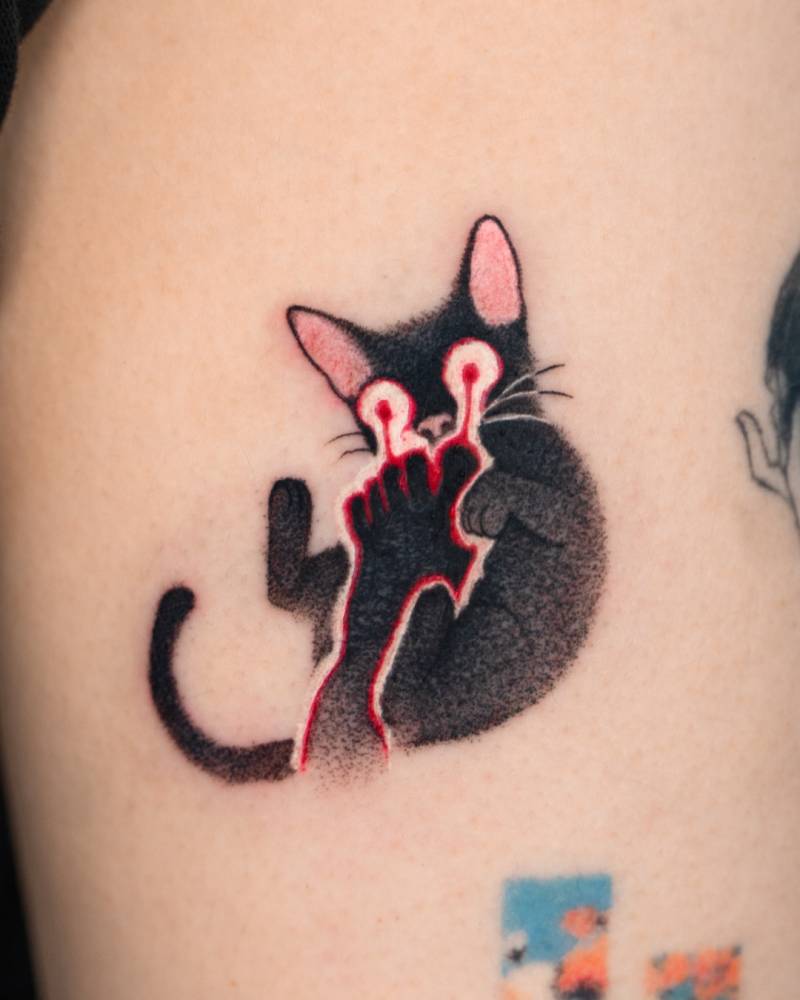
It began in 2021 with a hand-poked Black Cat series, which later evolved into a psychedelic TrippyCat design in 2025. The explosive response on Instagram made me realize its potential. I also personally felt that it was a fresh and fascinating character capable of expanding my universe, so I decided to develop it more seriously.

TrippyCat feels chaotic, yet controlled. What themes or emotions are you trying to explore through that character?
Through the medium of a cat, I visualize the inner depths of the human psyche—particularly vulnerability, anxiety, and confusion. Rather than portraying these emotions realistically, TrippyCat reinterprets them in distorted, hallucinatory forms to express something strange yet beautiful. At times, I incorporate humor inspired by the natural behavior of cats.
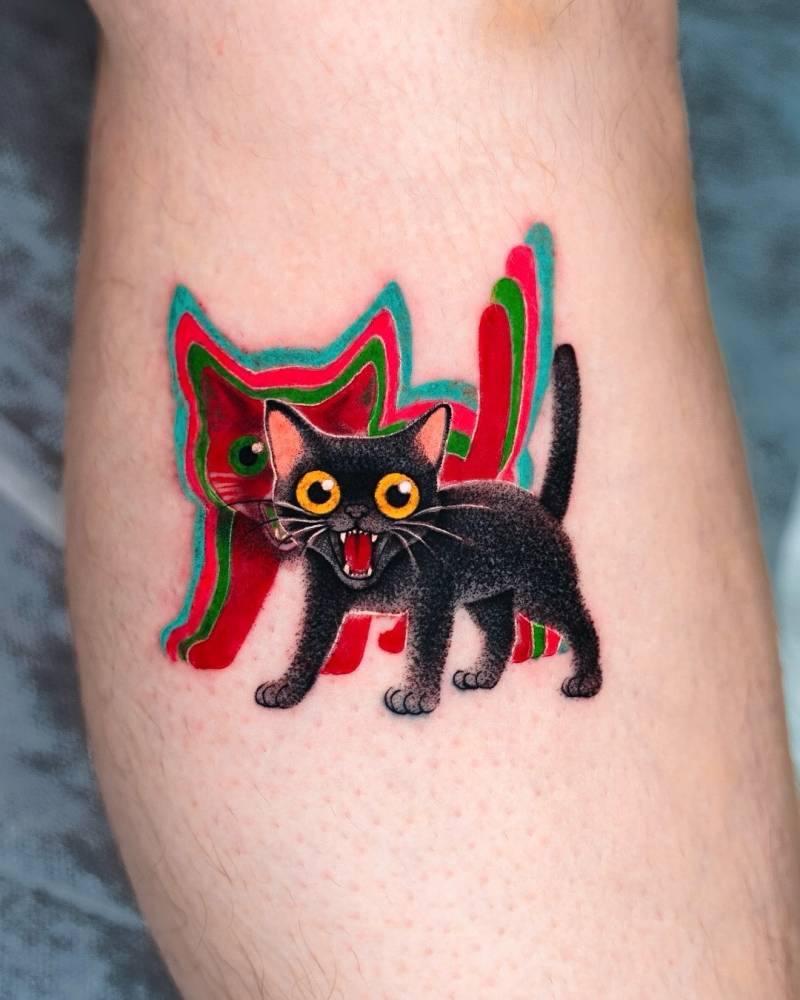
How do people interpret your TrippyCat differently? Have you had any surprising client reactions to it?
I believe art should be open to free interpretation. Some people simply see it as a cute cat image, and I respect and appreciate that perspective as well.

Was 2025 the turning point when you realized, ‘This is my style’—not just something influenced by others?
Yes, 2025 was definitely a turning point. I questioned whether my style was merely influenced by others, but by pushing that doubt to its limit, I ultimately gained clarity. I realized that influence is not imitation—it becomes deconstructed and recomposed within me, resulting in something entirely my own.
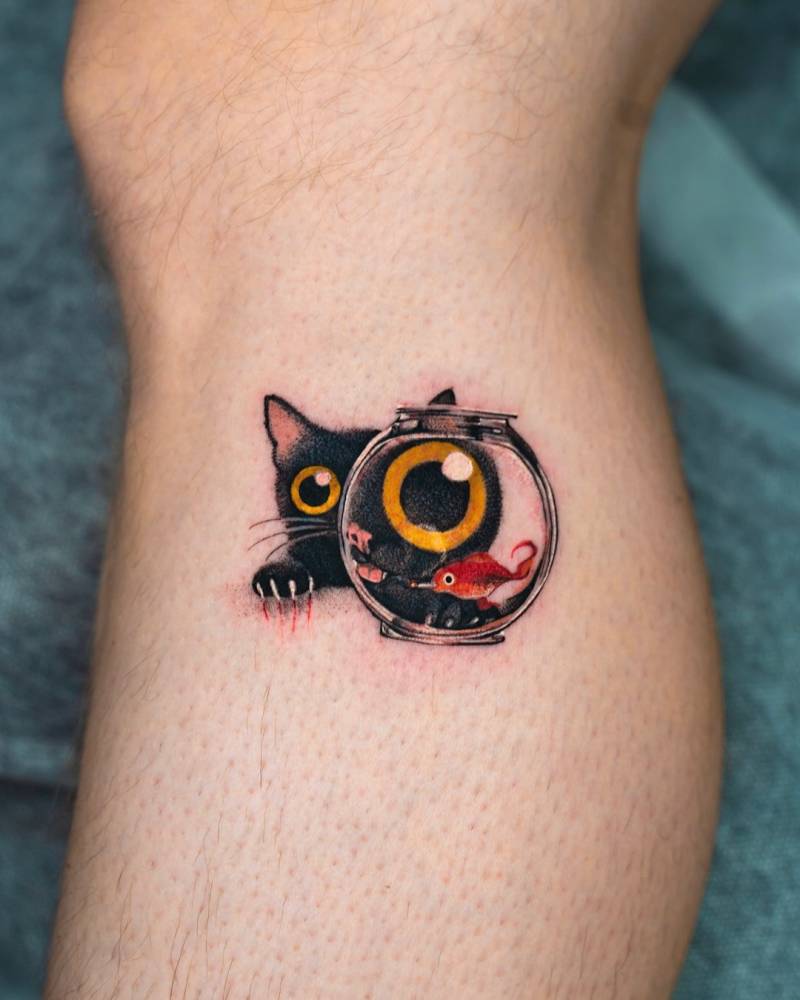
You describe yourself as a perfectionist. How do you balance that mindset with the playful, trippy energy in your designs?
I wasn’t a perfectionist from the beginning. When I started tattooing, I simply tried to give my best to everything I did. Through working on TrippyCat in 2025, I rediscovered my playful and humorous side. Now, I strive to maintain a balanced coexistence between those two energies.
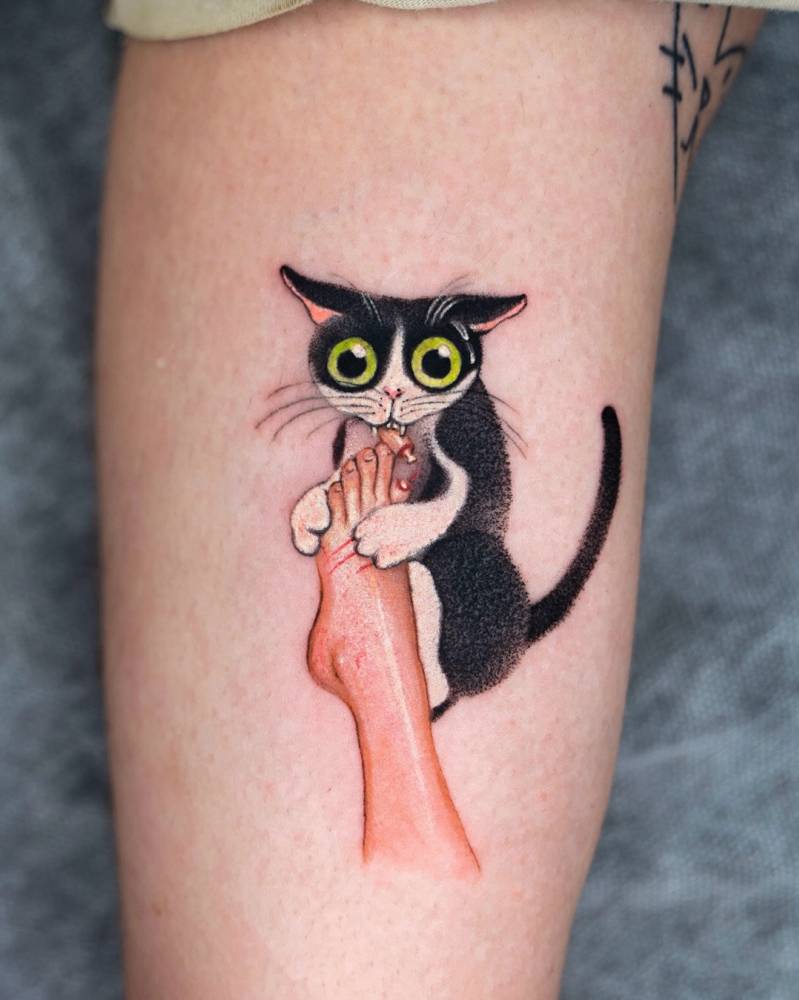
Aside from tattooing, you also paint in acrylic. How do those two practices feed into each other creatively—or stay separate?
When I paint with acrylics, I experience a stronger sense of emotional release compared to digital drawing. Technically, tattooing and acrylic painting create a positive synergy for one another. At the same time, painting reminds me of who I was—Yoon Jiho, drawing for myself—before I became "Yoonneedle." Rather than being completely separate practices, they feel like different mindsets within the same person.
Your cats, Eddie and Danji, seem to be a big part of your life. Do they inspire your work directly?
Eddie and Danji are significant sources of inspiration for the TrippyCat universe. Since I began raising cats, I’ve closely observed their behavior patterns and habits. Their expressions and unexpected moments often spark ideas for my work.
Do you listen to electronic music while working? Has it influenced the rhythm or energy of your tattoos?
I usually listen to hard techno and phonk while working. These genres help me focus and reduce anxiety. The relentless, repetitive beats of techno often mirror the steady, rhythmic motion of the needle, creating a sort of meditative trance. When I draw psychedelic mandalas while listening to techno, it feels as though I’m deconstructing and reassembling my senses.
Looking ahead, where do you want to take TrippyCat—or your style more broadly—in the next few years?
I want to continue as long as I’m alive. I don’t want to limit myself to tattooing alone—I hope to expand my talents into various fields and, someday, reach a point where I can truly consider myself a multidisciplinary artist.